










Blog
How AI Is Transforming Digital Marketing Without Replacing Human Strategy
7 September 2026
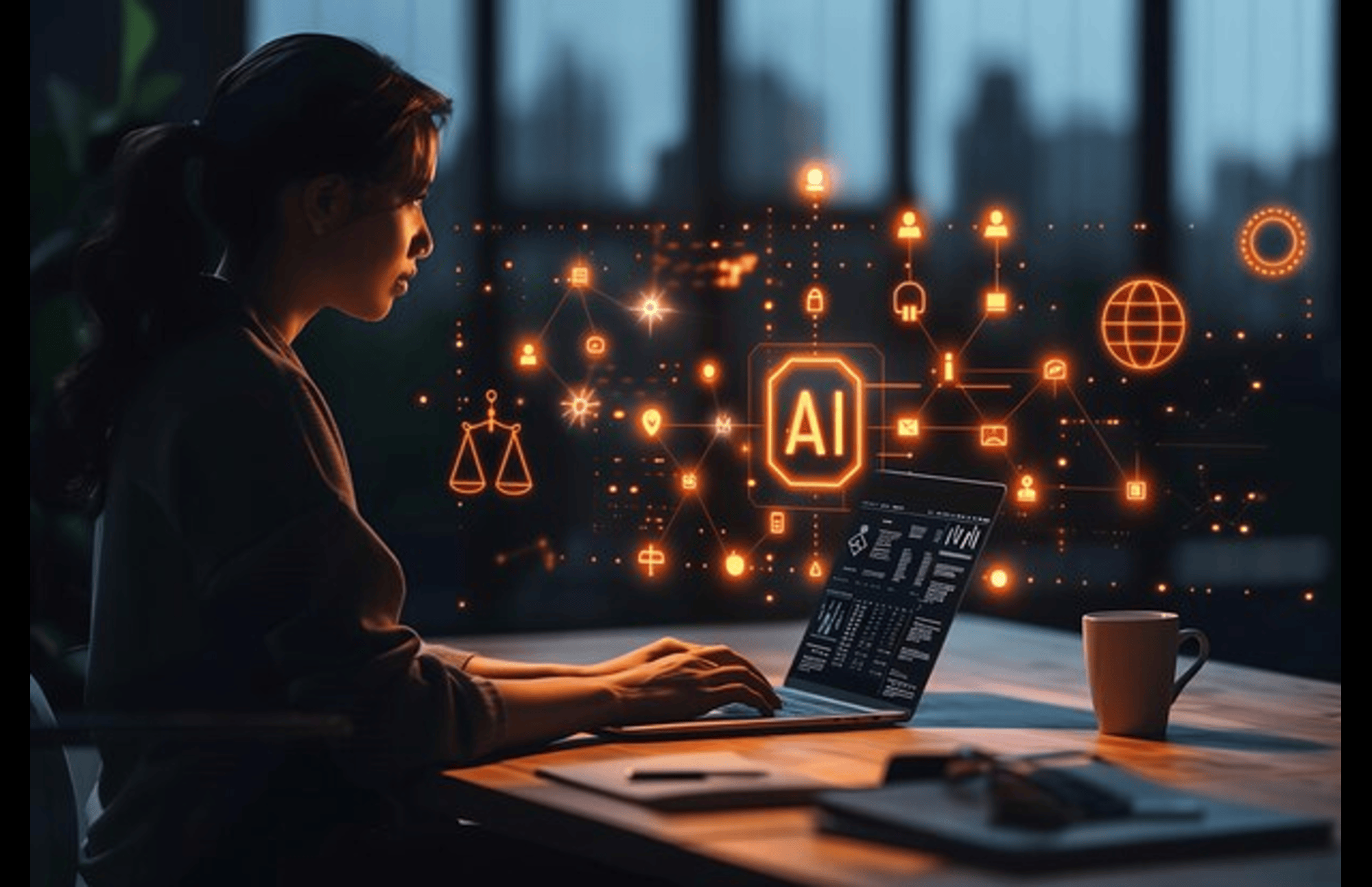
Artificial intelligence is rapidly changing the way businesses approach digital marketing. From analyzing customer behavior and optimizing campaigns to supporting content creation and improving search visibility, AI has become an increasingly valuable part of modern marketing operations. However, its greatest value does not necessarily come from replacing marketers or allowing technology to make every decision. Instead, AI can be most effective when it removes repetitive and time-consuming work, allowing experienced professionals to focus on strategy, creativity, customer relationships, and business growth. For organizations competing in the UAE’s increasingly digital marketplace, this balance between technology and human expertise can create a more efficient and sustainable approach to marketing.
AI as a Marketing Productivity Tool
Digital marketing involves a significant amount of repetitive work. Teams regularly analyze performance reports, organize keywords, review customer interactions, prepare content variations, monitor advertising campaigns, and evaluate website data. Although these activities are essential, they can take considerable time away from strategic planning. Artificial intelligence can help reduce this workload by processing large amounts of information quickly and identifying patterns that may otherwise require hours of manual analysis. When used correctly, AI becomes a productivity tool that supports marketing professionals rather than a replacement for them. The technology can prepare information and suggest possibilities, while human specialists remain responsible for deciding which recommendations are relevant to the business.
The Importance of Human Judgment
One of the biggest misconceptions surrounding AI in marketing is that faster automation automatically produces better results. In reality, effective marketing requires context. A campaign may generate strong traffic but fail to attract valuable customers. A keyword may have significant search volume but little commercial relevance. A social media post may receive engagement while communicating something that does not align with a brand’s positioning. AI can identify patterns within available data, but experienced marketers must interpret those patterns and determine what they mean for a particular business. This is why human judgment remains an essential part of an effective AI-supported marketing strategy. Technology can accelerate the process, but strategic decisions still require experience, creativity, and an understanding of the customer.
AI and Search Engine Optimization
Search engine optimization is an area where artificial intelligence can significantly improve efficiency. An experienced search engine optimisation agency in Dubai can use AI-supported tools to organize keywords, analyze search intent, identify content opportunities, evaluate competitors, develop content briefs, and review website performance. These capabilities can make SEO research faster and more comprehensive, particularly when businesses have large websites or operate across multiple markets. However, successful SEO requires more than identifying keywords or producing large quantities of content. Search intent, website experience, technical performance, content quality, authority, competition, and business objectives all influence organic visibility. AI can assist with the research and analysis, but SEO professionals need to determine which opportunities are genuinely valuable and how they fit into the overall marketing strategy.
Creating More Effective Social Media Strategies
Social media marketing also benefits from the responsible use of AI. Businesses can use artificial intelligence to identify engagement patterns, analyse audience conversations, generate initial content ideas, develop variations of captions, and organise publishing schedules. These capabilities can make social media management considerably more efficient, especially for businesses communicating with audiences across several platforms. However, successful social media marketing is fundamentally about relationships and communication. Audiences expect content that feels relevant, authentic, and connected to their interests. For businesses focused on Social Media Engagement in UAE, AI should therefore support the creative process rather than completely automate communication. A marketing professional can use AI-generated insights to understand what audiences are responding to and then develop content that reflects the brand’s personality, values, and objectives.
Improving Pay-Per-Click Campaign Management
Paid advertising is another area where AI can help marketers work more efficiently. Modern advertising platforms already use automation to assist with bidding, audience targeting, creative testing, and campaign optimisation. AI can also help marketing teams identify performance trends, compare campaign data, analyse advertising variations, and detect potential opportunities. However, businesses should avoid treating automation as a substitute for strategic management. A successful pay per click in UAE campaign requires clear objectives, appropriate targeting, carefully controlled budgets, effective landing pages, and meaningful conversion measurements. A campaign that generates inexpensive clicks is not necessarily successful if those visitors do not become qualified leads or customers. Human specialists therefore need to evaluate AI-generated recommendations in the context of actual business outcomes.
Building a Smarter AI Marketing Workflow
The role of an agency in this environment is not simply to introduce as many AI tools as possible. A professional marketing partner should identify where automation genuinely improves efficiency and where human expertise remains necessary. An effective AI Digital Marketing Agency in the UAE can create workflows in which AI supports research, reporting, data analysis, content development, campaign monitoring, and other repetitive processes, while experienced marketers maintain responsibility for strategy and quality control. This approach allows businesses to benefit from the speed and scalability of technology without losing the human perspective that is essential to effective marketing. The objective should not be to generate more automated output but to create better processes that allow marketing teams to spend more time on high-value activities.
Making Existing Content Work Harder
AI can also help businesses generate more value from content they have already produced. A detailed article can be transformed into social media content, a webinar can provide ideas for several shorter resources, and a research report can be converted into an executive summary or a series of educational posts. This type of content repurposing can reduce production time while extending the lifespan of existing marketing assets. Importantly, the original material provides a reliable foundation, while human marketers can review the AI-generated versions to ensure accuracy, consistency, tone, and relevance. This makes AI particularly useful as an assistant within the content production process rather than as an independent content authority.
Maintaining Quality in an AI-Driven Environment
As AI becomes more capable, maintaining quality control becomes increasingly important. Artificial intelligence can produce convincing language and impressive analysis, but it can also make errors, misunderstand context, or provide recommendations that are inappropriate for a specific business. Marketing teams should therefore establish clear review processes for AI-assisted content and campaigns. Important claims should be checked, brand messaging should be reviewed, and campaign recommendations should be evaluated against actual business objectives. Human oversight ensures that speed does not come at the expense of accuracy or credibility. For professional brands, this distinction is particularly important because a single poorly considered automated message can affect customer trust.
Measuring the Real Value of AI
Businesses should also look beyond the volume of AI-generated content when evaluating the success of artificial intelligence. The more useful question is whether AI is improving marketing productivity and performance. Organizations can evaluate how much time has been saved on reporting, how quickly data can be analyzed, how efficiently content can be repurposed, and whether campaign insights can be identified more quickly. They should also consider whether marketing professionals have more time to focus on strategic planning and creative development. The purpose of AI should not be to increase the amount of work produced simply because production has become faster. Its real value comes from removing unnecessary workload and enabling teams to concentrate on activities that require human expertise.
The Role of Maninder Wave in Modern Digital Marketing
Maninder Wave can approach AI as a strategic accelerator that complements professional marketing expertise. By combining AI-supported research and analysis with human strategy, businesses can create more efficient marketing workflows without sacrificing quality or authenticity. This approach can be particularly valuable for UAE businesses operating in competitive industries where customer expectations, search behavior, advertising costs, and digital trends can change quickly. AI can process information at speed, but experienced marketers are still needed to interpret that information, understand the market, protect brand positioning, and make informed decisions. The strongest results therefore come from combining technological efficiency with professional judgment.
The Future of AI and Digital Marketing
The future of digital marketing is unlikely to be a simple choice between human professionals and artificial intelligence. Instead, successful businesses will increasingly use both together. AI is well suited to repetitive processes, large-scale data analysis, information organization, content transformation, and performance monitoring. Human professionals remain essential for strategic thinking, creative direction, customer relationships, brand management, and decisions that require context. The businesses that benefit most from AI will not necessarily be those that automate the greatest number of tasks. They will be the organizations that understand which responsibilities technology can improve and which decisions still require human expertise.
AI has the potential to make digital marketing faster, more efficient, and more data-driven, but its purpose should be to enhance the work of marketers rather than eliminate the thinking behind it. When artificial intelligence handles repetitive workloads while professionals retain strategic control, businesses can achieve a stronger balance between efficiency and quality. For companies seeking sustainable digital growth in the UAE, this approach offers a practical path forward. AI can remove the work that slows marketing teams down, while human judgment continues to determine what the business should say, where it should compete, and how it should grow.
Frequently Asked Questions
How can AI help businesses improve their digital marketing?
AI can help businesses analyze large amounts of marketing data, identify patterns, support content development, organize research, monitor campaigns, and automate repetitive processes. Its greatest benefit comes from helping marketing professionals work more efficiently while allowing them to retain control over important strategic decisions.
Can AI replace professional digital marketers?
AI can automate many marketing tasks, but it cannot fully replace the strategic, creative, and contextual expertise of experienced marketers. Human professionals are still needed to interpret information, establish brand direction, understand customers, evaluate risks, and connect marketing activity with broader business objectives.
How does AI support SEO?
AI can assist with keyword research, search-intent analysis, competitor research, content planning, performance analysis, and other SEO-related activities. However, SEO specialists still need to evaluate recommendations and develop strategies based on the website, target audience, competition, and commercial goals.
Is AI useful for social media engagement in the UAE?
Yes. AI can analyse audience behaviour, identify engagement trends, generate content ideas, and support social media planning. Human involvement remains important because effective social media communication requires appropriate tone, cultural awareness, creativity, and genuine interaction with the audience.
Should businesses completely automate their PPC campaigns?
Complete automation is generally not the ideal approach. AI-powered advertising features can assist with bidding, targeting, testing, and performance analysis, but businesses still need human oversight to establish budgets, evaluate lead quality, understand customer value, and make strategic decisions about campaign investment.
