






Blog
Best AI Marketing Tools for Small Businesses in 2026: Features, Costs, and Use Cases
14 October 2026
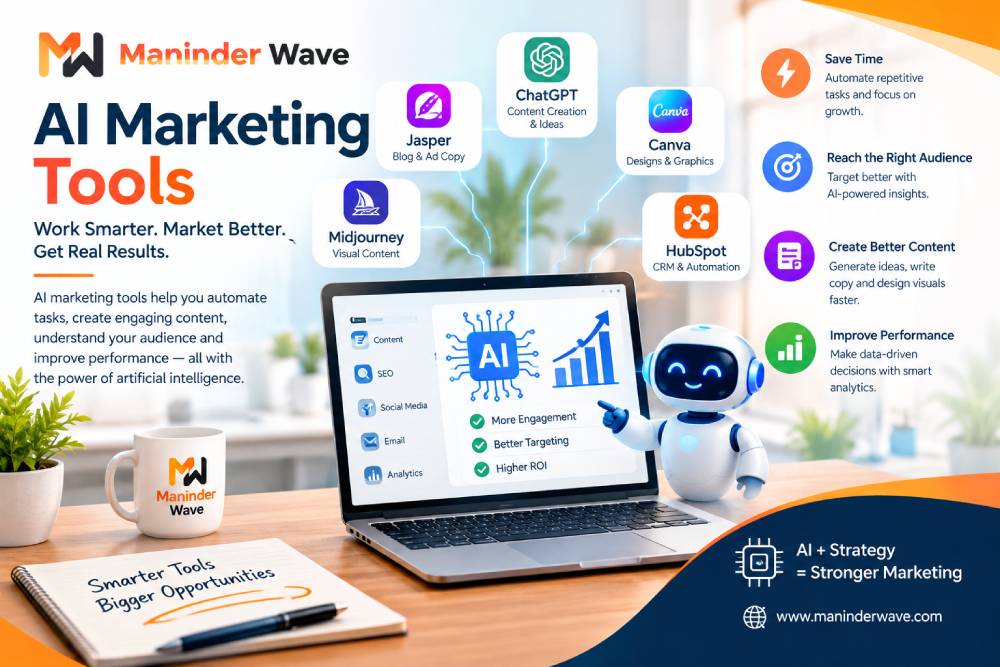
Small businesses need effective marketing to attract customers, build brand awareness, and increase sales without stretching their budgets. The Best AI Marketing Tools for Small Businesses can simplify content creation, search engine optimization, social media management, email campaigns, and lead generation. With the right combination of tools, businesses can save time, improve marketing decisions, and build a strategy that supports long-term growth.
What Are AI Marketing Tools?
AI marketing tools are software applications that use artificial intelligence to help businesses plan, create, manage, and improve their marketing activities. They can assist with keyword research, content writing, graphic design, campaign analysis, customer segmentation, and workflow automation.
For example, a local business can use an AI writing assistant to develop blog ideas, a design platform to create promotional graphics, and an email marketing tool to follow up with interested customers.
The Best AI Marketing Tools for Small Businesses do not need to cover every marketing task. A few tools that solve specific problems can provide more value than an expensive platform with features a business rarely uses.
Why Small Businesses Need AI Marketing Tools in 2026
Choosing the Best AI Marketing Tools for Small Businesses helps small teams improve productivity, manage campaigns efficiently, and make better use of limited marketing budgets.
Here are five practical benefits.
1. Save time on repetitive tasks
AI can help draft product descriptions, prepare campaign outlines, summarize reports, and organize content calendars. Employees can spend less time on routine work and more time on business priorities.
2. Maintain consistent content
Businesses can use AI to turn a blog article into social media posts, email ideas, and short promotional messages. Editing each version ensures that it suits the platform and audience.
3. Make better marketing decisions
Analytics tools can highlight website traffic trends, campaign engagement, and conversion patterns. These insights help businesses decide where to focus their resources.
4. Improve customer communication
AI-assisted segmentation can help businesses organize customers according to interests and previous interactions. With appropriate consent and privacy controls, this information can support more relevant marketing messages.
5. Control marketing expenses
Many platforms offer free plans or affordable entry-level subscriptions. Businesses can begin with essential features and upgrade when their needs increase.
Best AI Marketing Tools for Small Businesses in 2026
The right tool depends on your marketing goals, budget, and existing software. These six options cover content creation, design, SEO, social media, email marketing, and automation.
1. ChatGPT for Content Creation and Campaign Planning
Best for: Blog ideas, content outlines, marketing copy, and campaign planning.
ChatGPT helps businesses brainstorm topics, prepare content briefs, draft social media captions, and develop email campaigns. It can also assist with customer research questions and website messaging.
Key features:
- Content ideas and first drafts
- Campaign planning and content calendars
- Audience research assistance
- Content adaptation for different platforms
- Reporting summaries and brainstorming
Cost: Free access is available, with paid plans offering different features and usage limits.
Use case: An online store can use ChatGPT to develop seasonal campaign ideas, outline product guides, and prepare social media drafts.
Among the Best AI Marketing Tools for Small Businesses, ChatGPT is a useful starting point because it supports several content tasks. However, businesses should verify claims, add original insights, and avoid sharing confidential information without suitable safeguards.
2. Canva Magic Studio for Graphic Design
Best for: Social media graphics, promotional materials, presentations, and branded visuals.
Canva offers templates and AI-assisted design features that help businesses create visual content without advanced design skills. Available features depend on the selected plan.
Key features:
- Ready-made design templates
- AI-assisted visual creation
- Brand assets and reusable layouts
- Presentation and social media design
- Image editing and resizing
Cost: A free plan is available, while Canva Pro requires a paid subscription.
Use case: A restaurant can create menu announcements, event promotions, and social media graphics using reusable brand templates.
The Best AI Marketing Tools for Small Businesses should help maintain visual consistency, not just produce content quickly. Check image accuracy, text readability, brand colors, and mobile layouts before publishing.
3. Semrush for SEO and Competitor Research
Best for: Keyword research, website audits, competitor analysis, and content planning.
Semrush provides tools for understanding search demand and identifying opportunities to improve website visibility. Businesses looking for a Top SEO Agency Dubai should also prioritize search intent, technical website health, and relevant content rather than relying on AI-generated copy alone.
Key features:
- Keyword research and search intent analysis
- Competitor and backlink research
- Technical website audits
- Search ranking tracking
- Content optimization features on eligible plans
Cost: Paid subscriptions are available, with pricing based on the plan and billing terms. Some features have limited free access.
Use case: A consulting company can identify relevant search terms, research competitors, and plan service pages around the questions potential customers ask.
AI content alone does not guarantee rankings. Effective SEO also requires useful information, relevant experience, a technically accessible website, and content that matches search intent.
4. Buffer for Social Media Management
Best for: Scheduling posts and maintaining a consistent social media presence.
Buffer helps businesses plan and publish content across supported social platforms. Its AI-assisted features can help generate ideas and refine captions, depending on plan availability. For businesses targeting Gulf audiences, Social Media Engagement UAE strategies can support meaningful conversations, relevant content, and consistent interaction with potential customers.
Key features:
- Social media scheduling
- Content calendar management
- Caption assistance
- Publishing workflows
- Performance insights on eligible plans
Cost: A free plan is available, with paid options based on features and connected channels.
Use case: A fitness studio can schedule class announcements, educational posts, customer stories, and promotional updates in advance.
Automation should not replace genuine engagement. Review scheduled posts, respond to customer questions, and update content when business circumstances change.
5. HubSpot for CRM and Marketing Automation
Best for: Lead management, customer relationships, and follow-up workflows.
HubSpot combines customer relationship management with marketing and sales tools. Its available AI and automation features depend on the selected products and subscription.
Key features:
- Contact and lead management
- Email marketing capabilities
- Customer journey tracking
- Workflow automation on eligible plans
- Reporting and AI-assisted productivity features
Cost: Free CRM features are available. Paid products vary according to features, contact volumes, and business requirements.
Use case: A B2B company can organize incoming enquiries, track prospects through its sales pipeline, and create suitable follow-up reminders.
Before purchasing, review contact limits, automation access, onboarding costs, and possible upgrades. Smaller businesses may not need a complex CRM at the beginning.
6. Mailchimp for Email Marketing
Best for: Newsletters, promotional campaigns, and customer re-engagement.
Mailchimp helps businesses create email campaigns, manage subscribers, and review performance. AI-assisted features and automation options depend on the plan.
Key features:
- Email campaign creation
- Audience segmentation
- Campaign analytics
- Email templates
- Automation features on eligible plans
Cost: Pricing depends on the plan, contact limits, and email volume.
Use case: An e-commerce business can welcome new subscribers, share product updates, and send relevant follow-up messages to customers who have agreed to receive marketing emails.
Effective email marketing requires useful offers, clear subject lines, accurate personalization, and appropriate consent and unsubscribe options.
AI Marketing Tools Comparison: Features and Costs
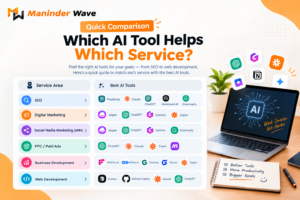
Different AI marketing tools support different business needs. Here is a quick overview of their main uses and pricing options.
- ChatGPT: Best for content creation, campaign planning, brainstorming, and marketing copy. It offers free and paid plans with different features and usage limits.
- Canva: Useful for creating social media graphics, promotional materials, presentations, and branded visuals. A free plan is available, along with paid options.
- Semrush: Helps with keyword research, competitor analysis, website audits, and SEO planning. It primarily offers paid subscriptions, with limited access to some features.
- Buffer: Supports social media scheduling, content calendar management, and post planning. It offers free and paid plans based on features and connected channels.
- HubSpot: Helps businesses manage customer relationships, organize leads, and automate marketing activities. It provides free CRM tools and paid products with additional capabilities.
- Mailchimp: Designed for email marketing, audience segmentation, newsletters, and campaign tracking. Pricing depends on the selected plan, contact limits, and email volume.
When comparing the Best AI Marketing Tools for Small Businesses, consider more than the monthly subscription fee. Review user limits, integrations, available features, usage allowances, and training requirements. A free plan may be sufficient for a new business, while a growing company may benefit from paid features that save time, simplify workflows, or improve lead generation.
How to Choose the Right AI Marketing Tools
The Best AI Marketing Tools for Small Businesses should match your goals, fit your budget, and support measurable improvements in leads, conversions, and customer engagement.
Step 1: Identify Your Biggest Marketing Challenge
If content production is slow, consider a writing assistant. If social media publishing is inconsistent, explore scheduling software. If enquiries receive delayed responses, consider a CRM or automation platform.
Step 2: Set a Practical Budget
Account for subscriptions, training, integrations, and possible upgrades. Start with tools that address your most important needs instead of purchasing several platforms at once.
Step 3: Check Integrations and Ease of Use
Choose software that works with your existing website, email platform, CRM, and advertising accounts. Poor integration can create extra work and reduce the value of automation.
Step 4: Test Before Purchasing
Use free plans or trials where available. Test a real task, such as preparing a campaign brief or managing new enquiries, and evaluate the quality and time saved.
Step 5: Measure Results
Track qualified leads, conversion rates, cost per lead, email engagement, and revenue. Do not judge a tool only by how much content it produces.
Practical Ways to Use AI in Your Marketing Strategy
Different businesses can apply AI in different ways.
Local service businesses: Research local search terms, develop useful service content, schedule social updates, and track calls or enquiry forms.
E-commerce businesses: Develop product content, brainstorm promotions, organize email audiences, and analyze sales trends. Verify product details before publishing.
B2B companies: Research industry challenges, prepare outreach drafts, organize prospect information, and support lead qualification. Review messages before sending them.
Startups: Combine an affordable writing assistant, a design tool, and basic analytics to establish a manageable marketing routine.
A practical workflow is to research customer needs, create useful content, publish across relevant channels, capture enquiries, follow up, and measure results. The Best AI Marketing Tools for Small Businesses can support each stage, but businesses still need a clear offer, a defined audience, and a website that makes the next step easy.
Common Mistakes to Avoid
AI can create problems when businesses prioritize speed over quality.
- Publishing unedited content: Verify facts, add original insights, and remove generic statements.
- Buying too many subscriptions: Avoid overlapping tools that increase costs without improving results.
- Ignoring customer privacy: Review data practices and access controls before sharing customer information.
- Automating every interaction: Keep human support available for complex questions and complaints.
- Tracking vanity metrics: Connect marketing activity to enquiries, conversions, acquisition costs, and revenue.
The Best AI Marketing Tools for Small Businesses should support responsible marketing, better decisions, and stronger customer relationships.
How an AI Digital Marketing Agency Can Help
Choosing software is only one part of an effective marketing strategy. Businesses must also decide which channels to prioritize, how to connect campaigns, and how to turn website visitors into qualified leads.
Maninder wave offers digital marketing and lead generation services, including SEO, PPC, content marketing, social media lead generation, email marketing, and AI-assisted marketing automation. Businesses investing in PPC Services UAE can use targeted advertising campaigns to reach relevant audiences, generate enquiries, and measure campaign performance.
For companies targeting UAE customers, an AI Digital Marketing Agency UAE can connect technology with local audiences and campaign objectives. Businesses exploring AI-Driven Digital Marketing Dubai can combine search visibility, paid campaigns, audience engagement, and automation. An AI Boost for Social Media Engagement in UAE can further support content planning, audience interaction, and more relevant social media campaigns.
Explore Maninder wave’s SEO services, AI marketing automation services, or contact the team to discuss your marketing goals.
Final Thoughts
The Best AI Marketing Tools for Small Businesses are not necessarily the most expensive or feature-rich platforms. They are the tools that help teams reach the right audience, create useful content, manage enquiries, and understand which activities contribute to growth.
Start with one or two clear needs, test suitable tools, and measure results before expanding your software stack. Combine automation with human review, original ideas, and a customer-focused strategy.
To make your marketing more organized and build a stronger lead generation process, explore Maninder wave and its digital marketing services. You can also contact the team to discuss a strategy suited to your business goals.
Frequently Asked Questions
Popular options include ChatGPT for content, Canva for design, Semrush for SEO, Buffer for social scheduling, HubSpot for CRM, Mailchimp for email marketing, and Zapier for automation. The right choice depends on your goals, budget, and existing software.
Some platforms offer free plans with limited features or usage. Advanced analytics, integrations, and automation may require paid subscriptions. Check current pricing before choosing a tool.
AI tools can assist with research, content, reporting, and repetitive tasks, but they do not automatically provide a complete marketing strategy. Agencies can add expertise, campaign management, audience research, and ongoing optimization.
Semrush supports keyword research, competitor analysis, and website audits. ChatGPT can help develop topic ideas and content briefs. Businesses should also review search performance and website quality.
