









Blog
The Future of Local Search: How AI Is Changing Visibility in 2027
20 October 2026
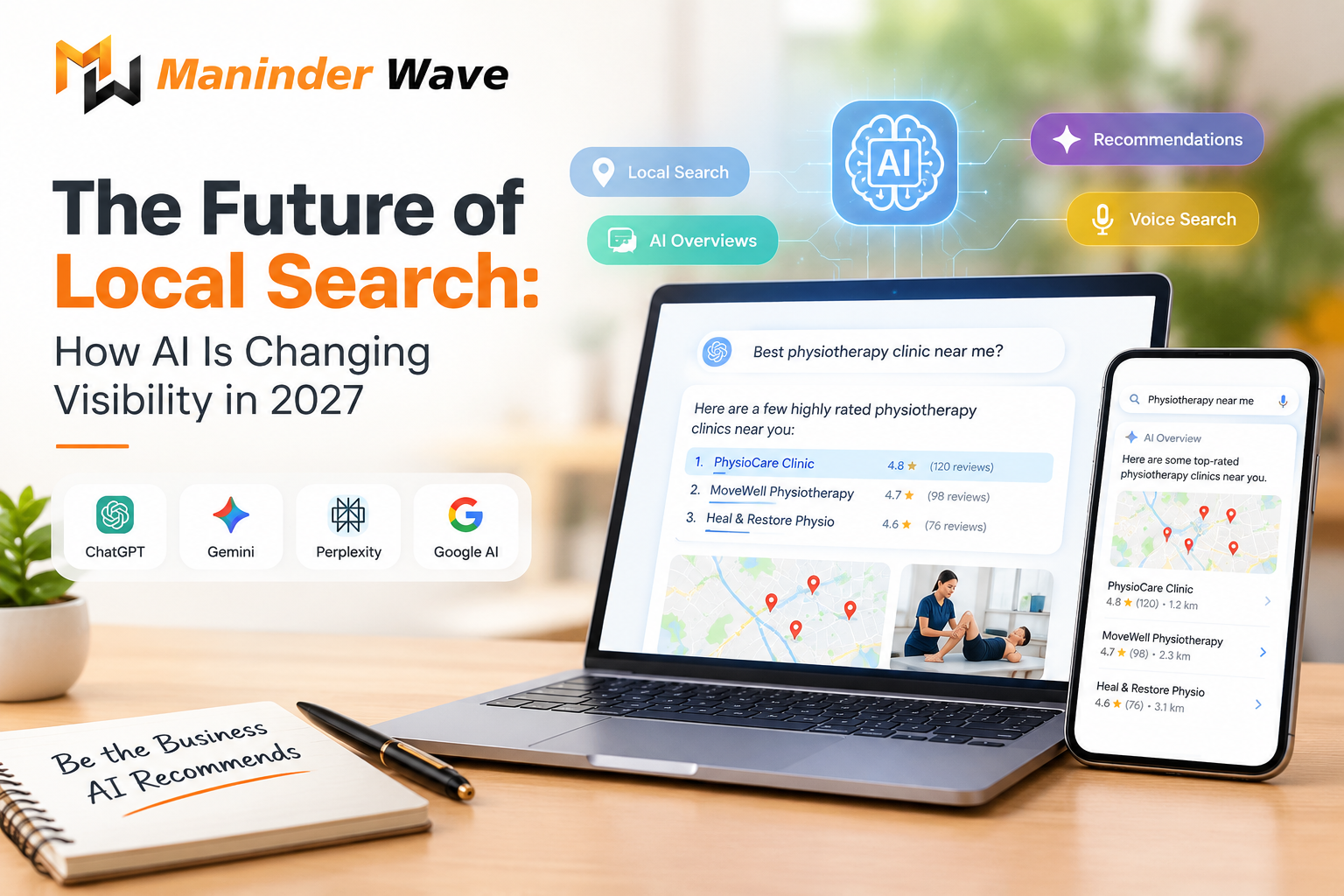
Search has changed more in the last two years than in the previous ten. A customer who once typed “best dentist near me” into Google and scrolled through ten blue links now asks ChatGPT, Gemini, Perplexity or Google AI Overviews and gets one summarized answer with two or three businesses named. If your business is not one of those names, you are invisible, no matter how good your service is.
This is the new reality of AI and local search. In 2027, visibility is no longer only about ranking number one. It is about being the business that AI systems trust, understand and recommend. In this guide, we break down the new rules of local visibility, explain Answer Engine Optimization (AEO) and Generative Engine Optimization (GEO), and give you a practical plan you can start using this week.
What Has Changed in Local Search?
For years, local SEO meant three things: a verified Google Business Profile, consistent NAP (name, address, phone) citations, and a steady flow of reviews. Those still matter, but they are now the entry ticket, not the winning strategy.
Here is what is different in 2027:
- Zero-click answers are the norm. AI Overviews and chatbot answers resolve the question on the results page. Users often never visit a website.
- Recommendations replace rankings. Instead of a list of ten results, the AI gives a short shortlist. Being in that shortlist is the new “position one.”
- Conversational queries dominate. People ask, “Which salon near me is good for curly hair and open on Sunday?” instead of typing “salon near me.”
- Voice and visual search keep growing. Phones, cars and smart glasses now answer local questions out loud, and they usually read only one result.
The businesses winning in this environment are not necessarily the biggest. They are the clearest, most trusted and best-structured. If you want a broader look at how this shift affects digital growth, explore the resources on Maninder Wave.
AEO vs GEO: What Is the Difference?
These two terms are everywhere in 2027, and they are often confused. They work together, but they target different things.
What Is Answer Engine Optimization (AEO)?
AEO is the practice of structuring your content so that search engines and voice assistants can lift a direct answer from it. Think featured snippets, “People Also Ask” boxes, voice search results and AI Overview citations. AEO rewards content that is concise, factual and organized around real questions.
What Is Generative Engine Optimization (GEO)?
GEO is the practice of making your brand and content easy for generative AI models, such as ChatGPT, Gemini, Claude and Perplexity, to understand, trust and cite when they build a response. GEO is less about one keyword and more about your overall authority, entity clarity and presence across the web.
In simple terms: AEO helps you be the answer. GEO helps you be the source the AI trusts. A strong AI search optimization strategy needs both. You can learn how we apply both approaches through the services and insights at maninderwave.
The New Rules of Local Visibility in 2027
Rule 1: Treat Your Google Business Profile as Your Most Important Page
Your Google Business Profile (GBP) feeds Google Maps, AI Overviews and Gemini. AI systems pull from it constantly. In 2027, an average profile no longer cuts it. Make sure you:
- Choose the most accurate primary category and add all relevant secondary categories.
- List every service and product with a short, clear description.
- Add real photos and videos monthly. Fresh visuals signal an active business.
- Use the Q&A and posts features to answer common questions in plain language.
- Keep hours, holiday timings and attributes (wheelchair access, Wi-Fi, parking) fully updated.
A complete, active profile gives AI engines the facts they need to recommend you with confidence.
Rule 2: Build Entity Clarity
AI models do not just read keywords. They understand entities: who you are, what you do, where you operate and how you relate to other known things. If your business name, address, description and services look different across your website, Google profile, Facebook, Instagram, directories and news mentions, AI gets confused and trusts you less.
Fix this by:
- Using one consistent business name, address and phone number everywhere.
- Writing a clear, one-paragraph description of your business and reusing its core wording across platforms.
- Adding schema markup (LocalBusiness, Service, FAQPage, Review, Organization) to your website so machines can read your details without guessing.
- Linking your website to your official social profiles using the sameAs property in schema.
Rule 3: Write Content That Answers Questions Directly
This is the heart of AEO. Start each important section or blog with the direct answer, then explain. For example:
How much does a website cost for a small business in India? A basic business website typically costs between ₹15,000 and ₹60,000 depending on pages, design and features. Here is what affects the price…
Notice the pattern: question as a heading, a 40 to 60 word direct answer, then supporting detail. AI engines love this structure because it is easy to extract and quote.
Use headings that mirror real searches, such as “How does local SEO work?”, “Is AEO different from SEO?” and “What is the best way to rank in AI Overviews?” Our blog and guides follow this same question-first format.
Rule 4: Reviews Are Now Training Data for AI
Online reviews do more than influence humans. AI models read review text to understand what you are known for. A review that says “best emergency plumber in Toronto, arrived in 30 minutes” tells the AI your service, location and strength in one sentence.
To get better reviews:
- Ask every happy customer, ideally within 24 hours of service.
- Gently encourage them to mention the service and the area.
- Reply to every review, positive or negative, in a natural and helpful tone.
- Never buy fake reviews. AI systems and Google are getting very good at detecting them.
Rule 5: Go Hyperlocal With Your Content
Generic content gets lost. Hyperlocal content gets cited. Instead of “Top 10 Digital Marketing Tips,” publish “Digital Marketing for Small Businesses in Toronto, Montreal and Calgary.” Create location pages, neighborhood guides and local case studies. Mention landmarks, markets, sectors and local events. This helps both traditional local search and AI engines match you to “near me” and city-based queries.
Rule 6: Earn Mentions, Not Just Backlinks
In classic SEO, backlinks were the main authority signal. In GEO, brand mentions matter just as much. AI models learn from news sites, forums, podcasts, Reddit, YouTube and industry blogs. When trustworthy places talk about your brand, you become part of the AI’s understanding of your industry.
Practical ways to earn mentions:
- Contribute expert quotes and guest articles to local and industry publications.
- Take part in local business associations and sponsor community events.
- Share case studies with real numbers and results.
- Answer questions on Quora, Reddit and LinkedIn with genuine expertise.
Rule 7: Demonstrate E-E-A-T on Every Page
Google’s E-E-A-T (Experience, Expertise, Authoritativeness, Trustworthiness) is now central to AI visibility. Show real people behind your brand:
- Add author bios with credentials and photos.
- Share original photos, data and first-hand experiences instead of stock content.
- Display certifications, awards, client logos and testimonials.
- Keep contact details, privacy policy and about page easy to find.
The more your content feels like it came from a real, experienced human, the more likely AI is to trust and cite it. Meet the person behind this approach on the Maninder Wave website.
Rule 8: Make Your Website Technically AI-Friendly
AI crawlers need to read your site as easily as Googlebot does. In 2027, technical basics are non-negotiable:
- Fast loading speed and strong Core Web Vitals, especially on mobile.
- Mobile-first design, since most local searches happen on phones.
- Clean heading structure (one H1, logical H2s and H3s).
- Server-rendered content, so important text is not hidden behind heavy JavaScript.
- A clear XML sitemap and sensible internal linking between related pages.
- Permission for reputable AI crawlers in your robots.txt if you want to be cited.
Rule 9: Optimize for Voice and Conversational Search
Voice assistants answer local queries in a single sentence. To be that sentence, write the way people talk. Use natural phrases like “Where can I find a reliable web designer near me?” and answer them in simple, short language. Add an FAQ section to your key pages with 5 to 8 real questions customers ask you on calls and WhatsApp.
Rule 10: Track AI Visibility, Not Just Rankings
Your old rank tracker only tells half the story. In 2027, also measure:
- Whether your brand appears in ChatGPT, Gemini, Perplexity and Google AI Overviews for your core queries.
- Branded search volume, which grows when AI mentions you.
- Google Business Profile actions: calls, direction requests and website clicks.
- Referral traffic from AI platforms in Google Analytics 4.
Once a month, ask each major AI tool, “Who are the best [your service] in [your city]?” and note whether you appear. This simple habit reveals gaps faster than any dashboard.
A Simple 30-Day Action Plan
Week 1: Foundation. Audit and fully complete your Google Business Profile. Standardize your name, address and phone number across every platform.
Week 2: Structure. Add LocalBusiness and FAQ schema to your website. Rewrite your top service pages to open with direct answers.
Week 3: Content. Publish two hyperlocal blog posts and one FAQ page built around real customer questions. Link them to each other and to your main pages, like you would from any well-organized site such as maninderwave.
Week 4: Authority. Run a review-collection campaign, pitch one local publication, and test your visibility across AI tools.
Common Mistakes to Avoid
- Stuffing keywords. AI understands meaning, not repetition. Write for people first.
- Ignoring Google Business Profile updates. Stale profiles lose trust quickly.
- Publishing thin AI-generated content. Unedited, generic content adds no value and rarely gets cited.
- Hiding answers in long paragraphs. If a human has to dig, an AI will skip you.
- Chasing tools instead of fundamentals. Platforms change, but trust, clarity and usefulness never go out of style.
Final Thoughts
The rules of visibility in 2027 are simple to say and demanding to do: be clear, be consistent, be helpful and be trusted. Businesses that treat AI and local search as a long-term investment in credibility, rather than a trick to game an algorithm, will keep showing up when customers ask their phones for a recommendation.
Start with your Google Business Profile, restructure your content around real questions, and build a brand that people and machines both trust. If you want more practical guides on AEO, GEO and local SEO, keep exploring Maninder Wave for fresh strategies that help your business get found in the age of AI.
Frequently Asked Questions
SEO helps your pages rank in search results. AEO structures your content to be chosen as a direct answer. GEO builds your authority so generative AI tools cite and recommend your brand. In 2027, you need all three working together.
Yes. Local SEO is the foundation of AI visibility. AI engines rely on your Google Business Profile, reviews, citations and website data to decide which local businesses to recommend.
Publish clear, question-based content, keep your business information consistent everywhere, collect genuine reviews, add schema markup and earn mentions on trusted local and industry websites.
Small improvements, such as better snippets and profile engagement, can appear in 4 to 8 weeks. Consistent AI citations and brand recommendations usually build over 3 to 6 months.
