WhatsApp
Trusted by growing businesses across 6 countries — book a free strategy call today

BlogSEO

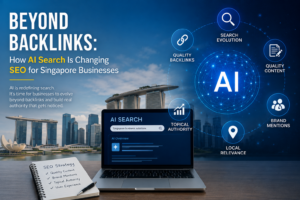
Beyond Backlinks: How AI Search Is Changing SEO for Singapore Businesses 

11 August 2026

Search is changing faster than ever. For years, businesses focused on one primary SEO goal: rank as high as possible on Google for valuable keywords. Backlinks, keyword optimisation, technical SEO, and content quality formed the foundation of that strategy.

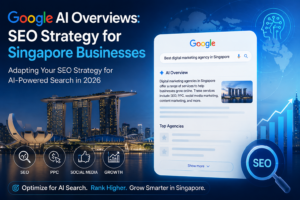
That foundation still matters. But the search process is evolving into one that is more AI-driven and conversational. Google has expanded AI Overviews and AI Mode, giving users more detailed answers and new ways to discover information, websites, brands, and businesses. Google has also stated that its AI Search experiences continue to connect users with relevant websites and original content.

For businesses competing in digital marketing in Singapore, this creates a new opportunity. SEO is no longer simply about earning a position on a traditional search results page. It is increasingly about making a business easy to understand, trustworthy, relevant, and visible across a wider search ecosystem.

That is where the idea of going “beyond backlinks” becomes important.

What Does “Beyond Backlinks” Actually Mean?

Going beyond backlinks does not mean backlinks are dead.

Quality backlinks remain an important part of SEO because links can help search engines discover content and understand relationships between websites. The real change is that backlinks should no longer be treated as the entire definition of online authority.

AI-powered search can interpret information across multiple sources and provide users with synthesised answers. Google’s current guidance specifically says that existing SEO fundamentals remain relevant for AI features and emphasises useful, unique content rather than a completely separate “AI SEO” system.

This means businesses should think about authority more broadly.

A strong SEO strategy can combine relevant backlinks with original content, topical expertise, brand recognition, local information, digital PR, reviews, useful resources, and consistent information across trusted platforms.

The objective is simple: make your business a credible source that search engines and AI systems can understand.

Why the SEO Landscape Is Changing Due to AI Search

Traditional search usually begins with a keyword.

A user might search:

“SEO agency Singapore”

AI-powered search can be much more conversational:

“What should a small business in Singapore consider when selecting an SEO firm?”

Or:

“Which digital marketing strategies can help a Singapore business generate local leads?”

Google says AI Mode users are increasingly asking longer, more natural questions. According to Google, the average AI Mode query is substantially longer than a traditional search query, showing how search behaviour is evolving from short keywords toward more detailed questions.

This creates a different challenge for businesses.

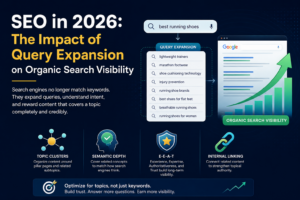
Instead of optimising one page around one keyword, brands need content that can answer related questions, demonstrate expertise, and provide enough context for search systems to understand what the business actually does.

Backlinks Still Matter – But Relevance Matters More

A large number of backlinks may look impressive in an SEO report, but quantity alone does not create meaningful authority.

Consider two scenarios.

The first website has hundreds of unrelated links from low-quality websites.

The second has fewer links, but they come from relevant industry publications, trusted business websites, local sources, and websites that genuinely discuss the company’s expertise.

The second profile can provide a much stronger foundation for long-term SEO.

This is why modern link building should focus on relevance, editorial value, context, and credibility rather than simply increasing the number of referring domains.

For businesses evaluating SEO companies in Singapore, this distinction is particularly important. A good SEO strategy should not simply promise a specific number of backlinks every month. It should explain where those links come from, why they are relevant, and how they contribute to the broader authority of the brand.

From Link Building to Authority Building

The biggest shift is moving from “link building” to “authority building”.

A business can build authority through several connected activities.

Publishing genuinely useful content can establish topical expertise. Industry mentions can increase brand recognition. Digital PR can place a company in credible publications. Relevant backlinks can strengthen website authority. Local business information can support local visibility. Customer reviews can provide additional trust signals.

These activities work together.

For example, imagine a Singapore marketing agency publishes an in-depth guide about AI search for local businesses. An industry publication references the research, another website discusses the findings, the brand receives relevant backlinks, and people begin searching for the company by name.

The value is bigger than one backlink.

The brand has created an ecosystem of relevance and recognition around a specific subject.

That broader approach is what businesses should aim for as search becomes more AI-driven.

Content Is Becoming More Important Than Ever

AI Search does not eliminate the need for websites. In fact, Google continues to emphasise connecting users with relevant web content and sources through its AI experiences.

But the type of content that earns attention matters.

Generic articles written simply to target keywords are unlikely to provide a strong competitive advantage. Instead, companies should produce content that shows first-hand expertise, tackles particular client issues, offers unique perspectives, and delivers concise answers to queries.

For a Singapore business, this could mean creating content around local customer behaviour, Singapore-specific search trends, industry challenges, pricing considerations, regulations, neighbourhoods, or market conditions where relevant.

The more useful and specific the information is, the easier it becomes to establish topical relevance.

SEO Is Becoming a Multi-Channel Strategy

Another important change is that search visibility does not exist in isolation.

A customer may discover a company through Google, see its content on LinkedIn, watch a video, read a third-party review, visit its website, and later search for the brand again.

That means businesses should think beyond one search engine result page.

A social media marketing agency in Singapore can play a role in building brand awareness and distributing useful content across platforms. Social media activity does not replace SEO, but it can contribute to a stronger overall digital presence by helping people discover, discuss, and remember a brand.

The same principle applies to digital PR, video content, community discussions, reviews, and other forms of online visibility.

The goal is not to create isolated marketing channels. The goal is to make the brand consistently recognisable and useful wherever potential customers are searching.

What About PPC in the AI Search Era?

Paid search is also evolving alongside AI-powered search.

Businesses investing in ppc services in Singapore should not view paid search and SEO as completely separate strategies. Paid campaigns can provide valuable insights into customer intent, messaging, search behaviour, and conversion patterns.

For example, PPC data can reveal which phrases generate qualified leads rather than simply clicks. Those insights can then influence landing pages, organic content, FAQs, and broader SEO strategy.

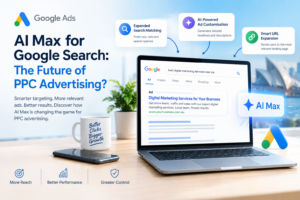
Google is also introducing more AI-powered capabilities into Search campaigns, including AI Max, which uses AI to expand query matching and optimise creative assets.

This reinforces a broader trend: search marketing is becoming more focused on understanding intent rather than relying only on exact keyword matching.

Local SEO Matters Even More for Singapore Businesses

AI Search does not make local SEO irrelevant.

For businesses serving specific locations, accurate local information remains essential. Google’s guidance for AI features also recognises local content as an important part of helping websites appear in relevant search experiences.

A Singapore business should therefore maintain accurate business information across its website and relevant platforms.

Location-specific service pages, useful local content, customer reviews, clear contact information, and a well-maintained Google Business Profile can all contribute to a stronger local search presence.

The key is consistency.

If a business describes its services differently across multiple platforms, uses outdated information, or provides little evidence of its local expertise, it becomes harder for both customers and search systems to understand the brand.

What Singapore Businesses Should Do Next

The future of SEO is not about abandoning traditional optimisation. It is about expanding it.

Businesses should continue investing in technical SEO, strong website architecture, useful content, internal linking, and high-quality backlinks. At the same time, they should build topical authority, strengthen brand recognition, create original resources, earn relevant mentions, and improve their local presence.

Most importantly, businesses should stop treating SEO as a collection of isolated tactics.

A backlink should support authority. Content should demonstrate expertise. Digital PR should increase visibility. Social media should help distribute ideas. Local SEO should make the business easier to discover. PPC should provide useful insights into customer intent.

Together, these activities create a stronger digital presence.

The Future of SEO Is About Being Worth Mentioning

The biggest opportunity in AI search is not finding a secret trick to “rank in AI”.

It is becoming the type of business that search systems have enough context and confidence to understand.

Google’s own guidance makes an important point: existing SEO best practices remain foundational for AI search experiences.

That means the future is not traditional SEO versus AI SEO.

It is better SEO for a more intelligent search environment.

Backlinks will continue to have value. But businesses that combine quality links with useful content, topical authority, brand visibility, local relevance, and credible third-party recognition will be better positioned for the changing search landscape.

For Singapore businesses, this is an opportunity rather than a threat.

The brands that start building genuine authority now will not only compete for traditional rankings. They will also be better prepared for the increasingly conversational, AI-powered ways customers discover businesses online.

Frequently Asked Questions

Yes. Backlinks remain part of a strong SEO strategy, particularly when they are relevant and earned from credible sources. The change is that businesses should not rely on backlinks alone. AI Search makes broader authority, useful content, relevance, and brand visibility increasingly important.

No. Google has explicitly stated that existing SEO fundamentals remain important for its AI Search features. Businesses still need technically sound websites, useful content, strong internal linking, relevant authority signals, and good user experiences.

Start with strong SEO fundamentals, then expand into topical content, local SEO, digital PR, brand mentions, original research, and useful resources. The objective should be to build a website and brand that search systems can easily understand and trust.

No. Instead, they should improve the quality and relevance of their link-building efforts. Earning links through valuable content, industry coverage, digital PR, partnerships, and original research is generally more meaningful than pursuing large quantities of unrelated links.

Yes. AI-powered search is changing how people discover and research information. Businesses that combine SEO with content, local visibility, social media, paid search, and brand-building activities can create a stronger overall search presence as user behaviour evolves.