









Blog
ChatGPT Is Now an Ad and Business Channel: What It Means for Search Marketers
13 November 2026
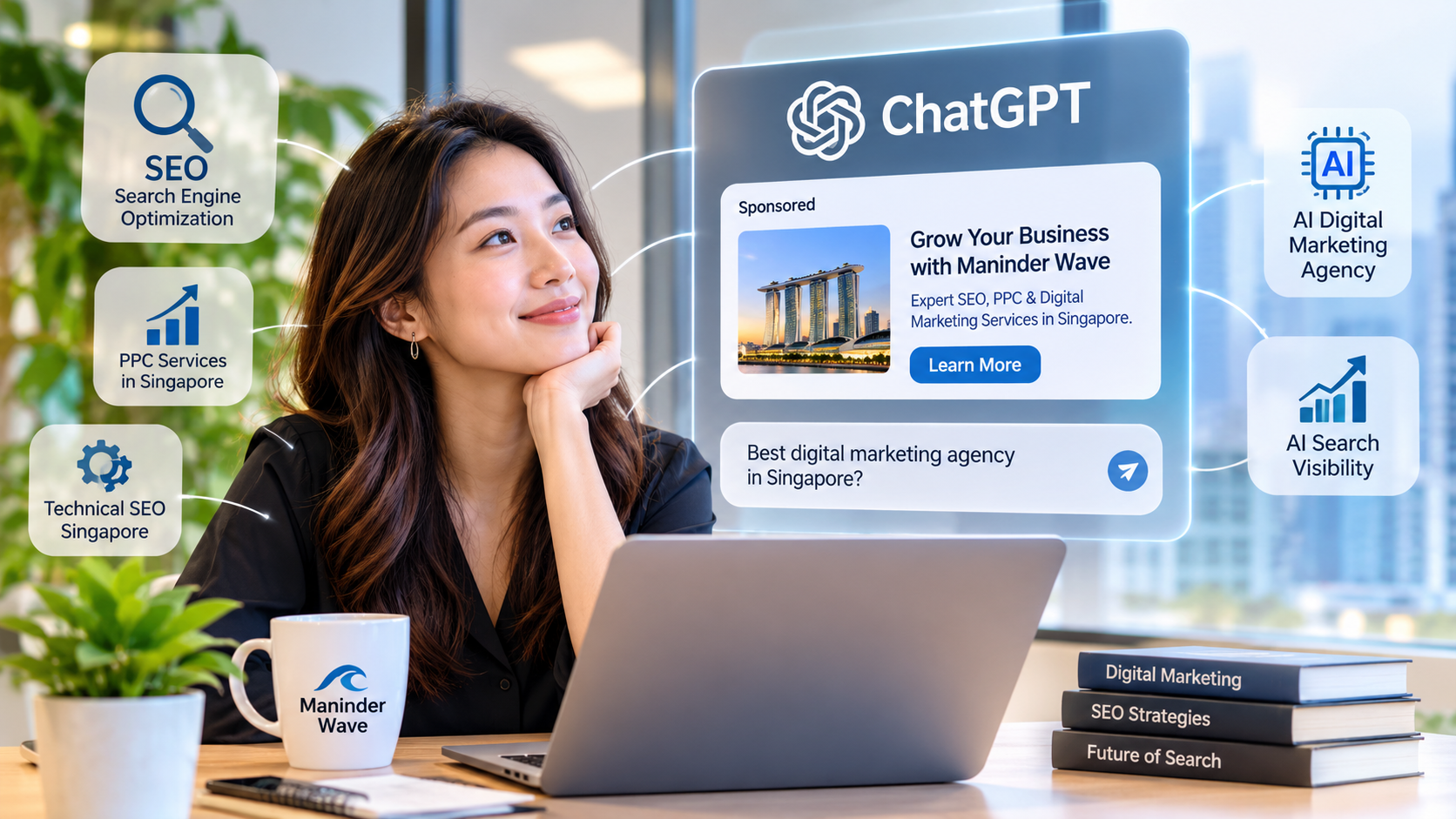
The way people search for information, discover brands, and make purchasing decisions is evolving. Traditional search engines are no longer the only starting point for online research. AI-powered platforms such as ChatGPT are creating new ways for users to explore products, compare services, and find business recommendations through conversations.
With the introduction of ChatGPT advertising, this shift is becoming particularly important for businesses and digital marketers. AI platforms are moving beyond information discovery and creating new opportunities for brands to reach potential customers.
For search marketers, this development raises an important question: how can businesses maintain online visibility when customers increasingly use AI assistants alongside traditional search engines?
The answer lies in combining search engine optimisation, paid advertising, content marketing, brand authority, and AI search visibility into a connected digital marketing strategy.
1. ChatGPT Is Changing How Customers Discover Businesses
Traditional search behaviour usually involves entering keywords into Google, reviewing search results, and visiting different websites. Conversational AI introduces a more interactive discovery experience.
Users can now describe their requirements in natural language, ask follow-up questions, and compare different solutions without conducting multiple separate searches.
For example, someone looking for a digital marketing agency in Singapore might ask ChatGPT to compare SEO services, PPC management, pricing considerations, and agency expertise.
This creates a new opportunity for businesses to become visible during the customer research and decision-making process.
For marketers, the focus is expanding beyond website traffic and keyword rankings. Brand mentions, business credibility, relevant content, and visibility across AI-powered platforms are becoming important considerations.
2. How ChatGPT Advertising Creates New Opportunities for Businesses
ChatGPT Ads introduce another potential channel for businesses to connect with relevant audiences. Instead of relying exclusively on traditional search advertisements, brands can explore advertising opportunities within conversational AI experiences.
This creates possibilities for reaching users while they are researching products, exploring services, or looking for solutions to specific problems.
However, advertising success will depend on more than visibility. Businesses must understand customer intent and communicate their value clearly.
Important considerations include:
- Audience targeting: Understand the interests, needs, and purchasing intent of potential customers.
- Contextual relevance: Develop advertising messages that relate to the user’s requirements.
- Brand positioning: Communicate what makes the business different from competing providers.
- Conversion optimisation: Create relevant landing pages that encourage enquiries and sales.
- Campaign measurement: Evaluate advertising performance through meaningful business metrics.
As conversational advertising develops, marketers will need to understand how it complements existing paid search and social media campaigns.
3. SEO Is Evolving Beyond Traditional Keyword Rankings
The growth of generative AI does not eliminate the importance of search engine optimisation. Google Search and other search platforms continue to help customers discover businesses, products, and information.
However, SEO strategies must increasingly account for different search experiences, including AI-generated answers and conversational discovery.
Modern search engine optimisation (SEO) services should focus on building topical authority, improving website relevance, and satisfying user search intent rather than simply repeating target keywords.
Businesses should create content that addresses informational, commercial, and transactional search queries.
For example, a digital marketing website can develop interconnected content covering:
- SEO strategies and organic search performance.
- Technical website optimisation and indexing.
- Paid search advertising and campaign management.
- Local SEO and Google Business Profile optimisation.
- AI search visibility and generative engine optimisation.
- Content marketing and brand authority.
This approach helps establish subject relevance while creating useful pathways between related website pages.
4. AI Search Visibility and Brand Authority Are Becoming Important
One of the emerging areas in digital marketing is Generative Engine Optimisation (GEO), which focuses on improving a brand’s visibility across AI-powered search and answer platforms.
Unlike traditional SEO, where marketers often evaluate rankings and organic clicks, AI visibility also involves understanding whether a brand appears in relevant AI-generated responses.
A business may have a strong website but limited recognition across other online sources. This makes consistent brand information and credible third-party references important.
Businesses can strengthen their online authority through:
- Publishing original research and informative industry content.
- Earning relevant mentions from trusted websites.
- Maintaining accurate company and service information.
- Creating detailed service pages and supporting FAQs.
- Building topical relevance through related content.
- Demonstrating expertise through useful resources.
There is no guaranteed method of securing AI recommendations. However, a trustworthy digital footprint can support brand discovery across multiple online environments.
5. Why Technical SEO Matters for AI and Traditional Search
Content quality is important, but a website also needs a technically sound foundation. Search engines must be able to crawl and understand website pages, while visitors expect fast loading speeds and smooth navigation.
This is why technical SEO Singapore remains an important investment for businesses competing in the local digital marketplace.
A comprehensive technical SEO strategy should address several areas:
- Website crawling and indexing: Ensure important pages can be discovered and indexed.
- Core Web Vitals: Improve loading performance, responsiveness, and visual stability.
- Structured data: Use relevant schema markup to help search engines interpret website information.
- Website architecture: Organise pages through logical categories and internal linking.
- Mobile optimisation: Provide a consistent experience across mobile devices.
- Duplicate content: Identify unnecessary URL variations and duplicate pages.
- HTTPS and website security: Maintain a secure browsing experience.
These improvements support search engine accessibility and user experience. They also help establish a reliable foundation for broader organic search and AI discovery strategies.
6. PPC Services in Singapore: Adapting to New Advertising Channels
Paid search advertising continues to be an effective way to reach customers with clear commercial intent. Platforms such as Google Ads allow businesses to target relevant search queries, manage advertising budgets, and measure campaign performance.
However, the emergence of conversational advertising creates another opportunity to explore.
Businesses investing in PPC services in Singapore should consider how different advertising platforms contribute to lead generation, customer acquisition, and revenue growth.
A strong PPC strategy should include:
- Keyword research based on commercial and transactional intent.
- Search campaign structure and audience segmentation.
- Compelling ad copy and relevant landing pages.
- Conversion tracking and campaign analytics.
- Continuous bid, budget, and performance optimisation.
ChatGPT Ads should be evaluated alongside established advertising channels rather than treated as an automatic replacement for Google Ads.
The right approach depends on campaign objectives, target audiences, platform availability, and measurable results.
7. The Role of an AI Digital Marketing Agency in the Changing Search Landscape
Managing organic search, paid campaigns, content marketing, and AI visibility requires a connected strategy.
An AI digital marketing agency can help businesses understand how emerging technologies and traditional marketing channels work together.
Instead of focusing only on individual marketing activities, businesses should consider the complete customer journey, from initial discovery to final conversion.
This involves understanding search intent, identifying content opportunities, improving website performance, and using marketing analytics to evaluate results.
For Singapore businesses, combining local SEO, technical optimisation, PPC advertising, and AI-focused content strategies can help create a stronger digital presence.
The objective is not to adopt every new AI tool. It is to identify technologies and marketing channels that provide genuine value to the business.
8. How Search Marketers Can Prepare for the Future
As customer discovery habits continue to evolve, businesses should strengthen their existing marketing foundations while exploring emerging opportunities.
Here are five practical steps:
- Develop topical authority: Publish useful, interconnected content that addresses important customer questions and industry topics.
- Improve organic search performance: Focus on search intent, content relevance, internal linking, and technical SEO.
- Strengthen brand credibility: Build relevant mentions, consistent business information, and a recognisable online identity.
- Diversify advertising channels: Evaluate Google Ads, social advertising, and conversational advertising based on business objectives.
- Measure AI and search visibility: Monitor organic traffic, qualified leads, conversions, brand mentions, and referral sources where measurable.
A diversified marketing strategy can help businesses adapt to changing discovery experiences without becoming overly dependent on a single platform.
Conclusion
ChatGPT’s development as an advertising and business discovery channel represents an important shift in the digital marketing landscape. Customers are increasingly using conversational AI to research services, compare options, and explore potential solutions.
For search marketers, this means looking beyond traditional keyword rankings and understanding how SEO, PPC, content marketing, technical optimisation, and AI search visibility work together.
At Maninder Wave, we believe successful digital marketing starts with understanding customer behaviour and building strategies around meaningful business outcomes. By strengthening search visibility, improving website performance, and exploring emerging AI opportunities, businesses can build a more adaptable digital presence.
Frequently Asked Questions
ChatGPT advertising refers to sponsored advertising opportunities within the ChatGPT experience. These advertisements are separate from organic AI-generated responses and provide businesses with another potential customer acquisition channel.
ChatGPT Ads may introduce additional competition for digital advertising budgets while creating new opportunities to reach customers through conversational experiences. Traditional SEO and PPC will continue to serve important roles.
SEO focuses on improving visibility in traditional search engine results, while GEO focuses on improving brand and content visibility in generative AI responses. Both approaches can support a broader digital visibility strategy.
Businesses can focus on helpful content, topical authority, accurate business information, credible brand mentions, structured website information, and strong technical SEO foundations.
Yes. SEO supports long-term organic visibility, while PPC can generate targeted traffic through paid campaigns. Combining both can help businesses reach customers at different stages of the purchasing journey.
