











Blog
Google November 2026 Core Update: What It Means for Your Rankings and How to Respond
12 November 2026
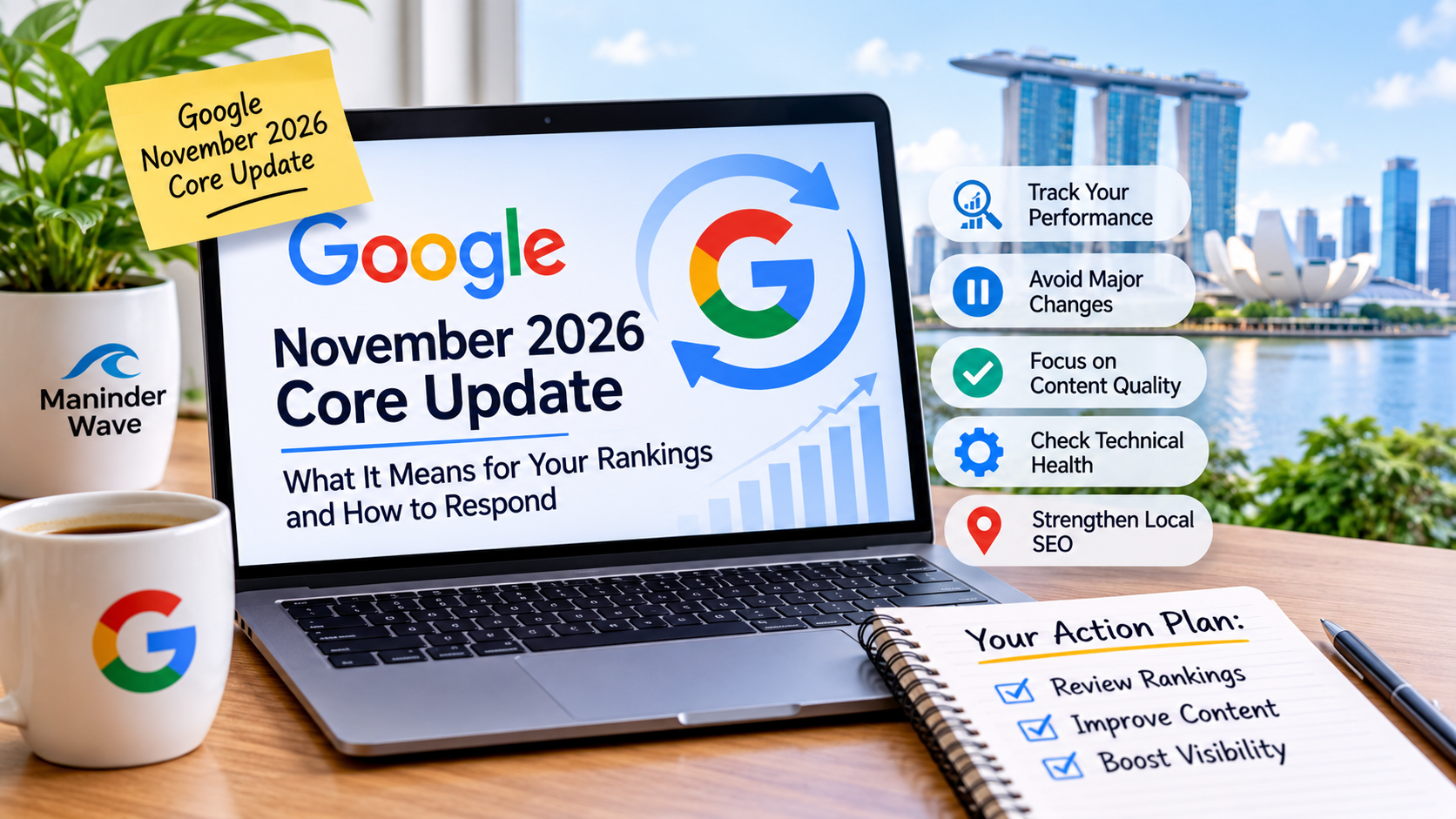
Quick answer: Google’s November 2026 core update is a broad ranking refresh that began on November 10 and is expected to take about two weeks. Don’t change your site mid-rollout. Record a baseline now, wait for Google to confirm completion, then review which pages gained or lost visibility and why.
What is the Google November 2026 core update?
Google confirmed that the November 2026 broad core update began on November 10 and is expected to take about two weeks to roll out. Google described it as a “regular update”, meaning it adjusts some of the core systems that decide how pages are ranked, not one specific tactic or spam practice.
A core update is not a penalty. It re-evaluates which pages best satisfy a searcher’s intent, so a ranking drop usually means other pages were judged more helpful for that query. The effects also reach beyond standard results: core updates can influence Google Discover, featured snippets and other search features.
I’m Maninder, and at Maninder Wave we work as an AI digital marketing agency helping businesses read updates like this calmly instead of reacting to the first dip.
How long will the rollout take?
Google hasn’t posted an end date. For context, the May 2026 core update ran from May 21 to June 2, under 12 days. Rankings often fluctuate in waves during this period, so early data is unreliable.
What should you do during the rollout?
- Record a baseline. Save current rankings, organic traffic, impressions and enquiry numbers.
- Freeze major changes. Editing pages mid-update makes it hard to identify the cause of any movement.
- Verify your data. Search Console has shown odd figures recently: around October 31, some sites saw sudden click spikes, which one SEO writer attributed to a glitch. Cross-check against Google Analytics and real calls or form fills.
How do you analyse the impact after it ends?
Once Google confirms completion, compare two to three weeks of data against the period before the update.
- Segment by page type. Review service pages, blog posts and location pages separately.
- Match search intent. Check whether Google now favours guides, comparisons or local listings for your target queries. A sales page can lose ground when intent shifts toward information.
- Assess content quality. Ask whether each page shows real experience, accurate details and clear authorship. These qualities are often grouped under E-E-A-T (experience, expertise, authoritativeness and trustworthiness).
- Check technical health. Slow loading, broken internal links and thin pages are common causes of weak performance.
- Strengthen topical coverage. If you have one page on a subject, support it with related pages on adjacent questions and link them together. This builds topical authority.
Why Singapore businesses should pay close attention
Singapore is a compact market where a clinic, renovation firm or tuition centre may compete with only a handful of local rivals. A small position change in the local pack or organic results can quickly affect calls and bookings.
This is where AI local SEO services in Singapore are useful. AI tools can audit a Google Business Profile, compare service descriptions across neighbourhoods, monitor map visibility and flag inconsistent citations. A human still needs to confirm that every detail is accurate, because local trust depends on real information.
Practical local signals to check this week:
- Business name, address and phone number consistent across your site and directories
- Google Business Profile categories, hours and service areas up to date
- Recent customer reviews answered
- Location pages that describe real work in specific districts, not generic copy
How is search changing beyond Google?
Searchers increasingly use AI answers and chat assistants alongside classic results, and advertising is following. Search Engine Land recently reported on the launch of the ChatGPT Business Hub and changes to ChatGPT Ads bidding options on November 9.
Because of this, search engine optimization seo services now need to cover entity clarity as well as keyword rankings. That means stating plainly who you are, what you offer, who it’s for and where you operate, then reinforcing it with structured data (schema markup), consistent profiles and well-organised headings. Content structured this way is easier for both Google and AI systems to understand and quote.
Should paid and organic search work together?
Yes. If a core update lowers organic visibility for a few weeks, paid search can protect lead flow. Well-run PPC marketing services in Singapore also produce useful data: which queries convert, which ad messages earn clicks and which landing pages persuade. Feed that back into your organic content plan and you’ll prioritise the right pages first.
Checklist for this week
- Save a baseline of rankings, traffic and enquiries
- Pause large site changes until the rollout ends
- Re-read your top five pages as a first-time visitor
- Confirm your business details match across all listings
- Make sure paid campaigns aren’t relying on organic traffic alone
- Keep short weekly notes to spot real patterns
Final thoughts
Core updates will keep arriving, and the businesses that handle them best aren’t the fastest to react. They publish honest, well-structured content, keep technical foundations clean and decide from calm data. If your numbers have shifted and you can’t see why, the team at Maninder Wave can review your site and give you a straight answer.
Frequently Asked Questions
No. A spam update targets specific manipulative practices, while a core update reassesses overall relevance and helpfulness across many sites.
Often, yes, but recovery tends to follow genuine improvements to content and usability and may only appear after the next core update. Quick fixes rarely work.
Not necessarily. Publish useful content as normal, but avoid rewriting your highest-performing pages until you understand what changed.
Compare ranking and traffic trends by page group before and after the rollout, and rule out tracking errors first.
