BlogSEO
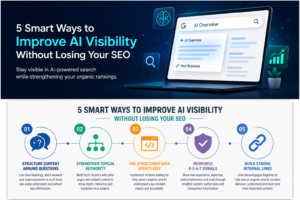
5 Smart Ways to Improve AI Visibility Without Losing Your SEO
7 August 2026
Digital marketing is going through one of its biggest shifts in years. AI-powered search tools, chat-based assistants and AI overviews are now sitting between businesses and the customers who used to find them through a simple Google search. For many business owners, this raises a genuine concern: if AI tools are answering questions directly, will traditional search engine optimisation still matter?

The short answer is yes. Search engine optimisation is not being replaced by AI visibility; it is being layered with it. The businesses that win in this new landscape are the ones that understand how to strengthen their presence in AI-generated answers while keeping their organic rankings strong. This article breaks down five smart, practical ways to do exactly that, using the same topic-cluster thinking and E-E-A-T principles that support long-term digital marketing success.
Understanding AI Visibility and Why It Matters
AI visibility refers to how often, and how accurately, a brand or piece of content is featured, cited or referenced inside AI-generated answers. This includes tools like AI overviews in Google search, conversational AI assistants and other generative platforms that summarise information instead of simply listing links.
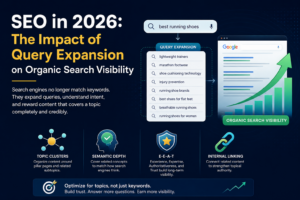
Unlike traditional search engine optimisation, which focuses on ranking a page on a results page, AI visibility focuses on whether a business gets mentioned, quoted or recommended inside a generated response. Both systems rely on similar foundations, though, including clear content structure, credible sourcing and strong topical authority. In fact, this connects closely to how search engines already interpret intent through query expansion and organic search visibility, since AI systems are effectively applying the same principle of broadening a single query into a wider set of related concepts before deciding what to surface. This is why digital marketing strategies built around genuine expertise tend to perform well across both traditional and AI-driven search.
1. Structure Content Around Clear, Answerable Questions
AI systems are built to extract direct answers from well-organised content. Pages that bury information inside long, unstructured paragraphs are harder for AI tools to summarise accurately, which reduces the chance of being cited.
To improve AI visibility, content should be broken into clear sections with descriptive subheadings, short direct answers near the top of each section, and supporting detail underneath. This format also improves on-page SEO, since search engines reward content that is easy to scan and clearly organised. Businesses working on their search engine optimisation strategy should treat this structure as a foundation, not an afterthought, because it benefits both traditional rankings and AI-generated summaries at the same time.
2. Strengthen Topical Authority With Topic Clusters
AI tools, much like modern search engines, favour sources that demonstrate depth on a subject rather than a single page targeting one keyword. This is where topic clusters become essential. A topic cluster organises content around a central pillar page, supported by several related pages covering subtopics in detail, all linked together.
For example, a pillar page on digital marketing might connect to supporting content on content marketing, paid advertising, local SEO and social media strategy. This structure signals genuine subject matter expertise to both search engines and AI systems, increasing the likelihood that content gets referenced as a trustworthy source. Businesses can see this approach applied practically through a structured content marketing programme, where pillar and cluster content work together to build topical depth over time.
3. Use Structured Data to Help AI Understand Content
Structured data, often added through schema markup, gives search engines and AI systems extra context about what a page actually contains. This includes details like author information, publication dates, FAQs, product details and business information.
While structured data has long been a technical SEO best practice, it has become even more important for AI visibility. AI tools rely heavily on clearly labelled, machine-readable information when generating summaries or answers. Pages without structured data are harder to interpret accurately, which can mean being left out of AI-generated results entirely, even if the underlying content is strong. Reviewing technical SEO fundamentals, including structured data implementation, is one of the simplest ways to improve both AI visibility and organic search performance together.
4. Reinforce E-E-A-T Signals Across the Website
Google’s E-E-A-T standard, which stands for Experience, Expertise, Authoritativeness and Trustworthiness, is not just a ranking consideration anymore. AI systems use similar signals to decide which sources are credible enough to cite or reference in generated answers.
Demonstrating genuine experience through case studies, original research, clear author bios and transparent business information helps build the kind of trust that supports visibility across both search engines and AI platforms. This matters particularly for Australian businesses, since local trust signals such as ABN details, Australian case studies and location-specific expertise help distinguish a brand from generic, low-quality content that AI systems are increasingly trained to filter out.
5. Keep Internal Linking Strong and Purposeful
Internal linking helps search engines and AI crawlers understand how content on a website relates to other content on the same site. When pages are linked thoughtfully, based on genuine topical relevance rather than random placement, it reinforces the overall structure of a topic cluster and helps establish which pages carry the most authority on a given subject.
This is particularly useful when trying to balance AI visibility with traditional SEO, since a well-linked site makes it easier for both systems to find, understand and trust the most relevant content. Businesses reviewing their overall approach can also pair this with a data-driven pay-per-click strategy, since paid search data often reveals which topics and queries are already driving genuine interest, helping prioritise where internal linking and content depth should be strengthened first.
Final Thoughts
AI visibility is not a replacement for search engine optimisation; it is an extension of the same underlying principles: clear structure, genuine expertise and content that genuinely helps the person searching. Businesses that invest in structured, well-organised content, strong topical authority and honest E-E-A-T signals are positioning themselves to be found and trusted across traditional search results and AI-generated answers alike.
For businesses that want a practical, data-backed approach to balancing these priorities, working with an experienced team like Maninder Wave for digital marketing in Australia can help translate these strategies into a roadmap suited to specific industry needs and local search behaviour.
Frequently Asked Questions
What is AI visibility in digital marketing?
AI visibility refers to how often a business or piece of content is featured, cited or recommended inside AI-generated answers, such as AI overviews or conversational search assistants, rather than simply appearing as a link on a results page.
Why is structured data important for AI visibility?
Structured data gives search engines and AI systems clear, machine-readable context about a page’s content, author and purpose. This makes it easier for AI tools to accurately summarise and cite the information.
How do topic clusters help with AI visibility?
Topic clusters demonstrate depth and expertise on a subject by connecting a central pillar page to several related supporting pages. This structure helps both search engines and AI systems recognise genuine topical authority rather than isolated, shallow content.
Do Australian businesses need a different approach to AI visibility?
The core principles are similar globally, but local trust signals matter. Including Australian case studies, location-specific expertise and clear business details helps AI systems distinguish credible local brands from generic content, particularly for searches with local or regional intent.
How is AI visibility different from ranking on Google?
Ranking on Google measures where a page appears on a results page. AI visibility measures whether a business is mentioned, quoted or referenced inside an AI-generated response, which does not always follow the same format as traditional rankings.
Does improving AI visibility hurt traditional SEO rankings?
No, when done correctly, the two work together. Strategies like clear content structure, structured data and strong topical authority improve both AI visibility and traditional search engine optimisation at the same time.