










Blog
Google Ads Introduces New Budget Controls: What Singapore Businesses Should Change in Their PPC Strategy
16 October 2026
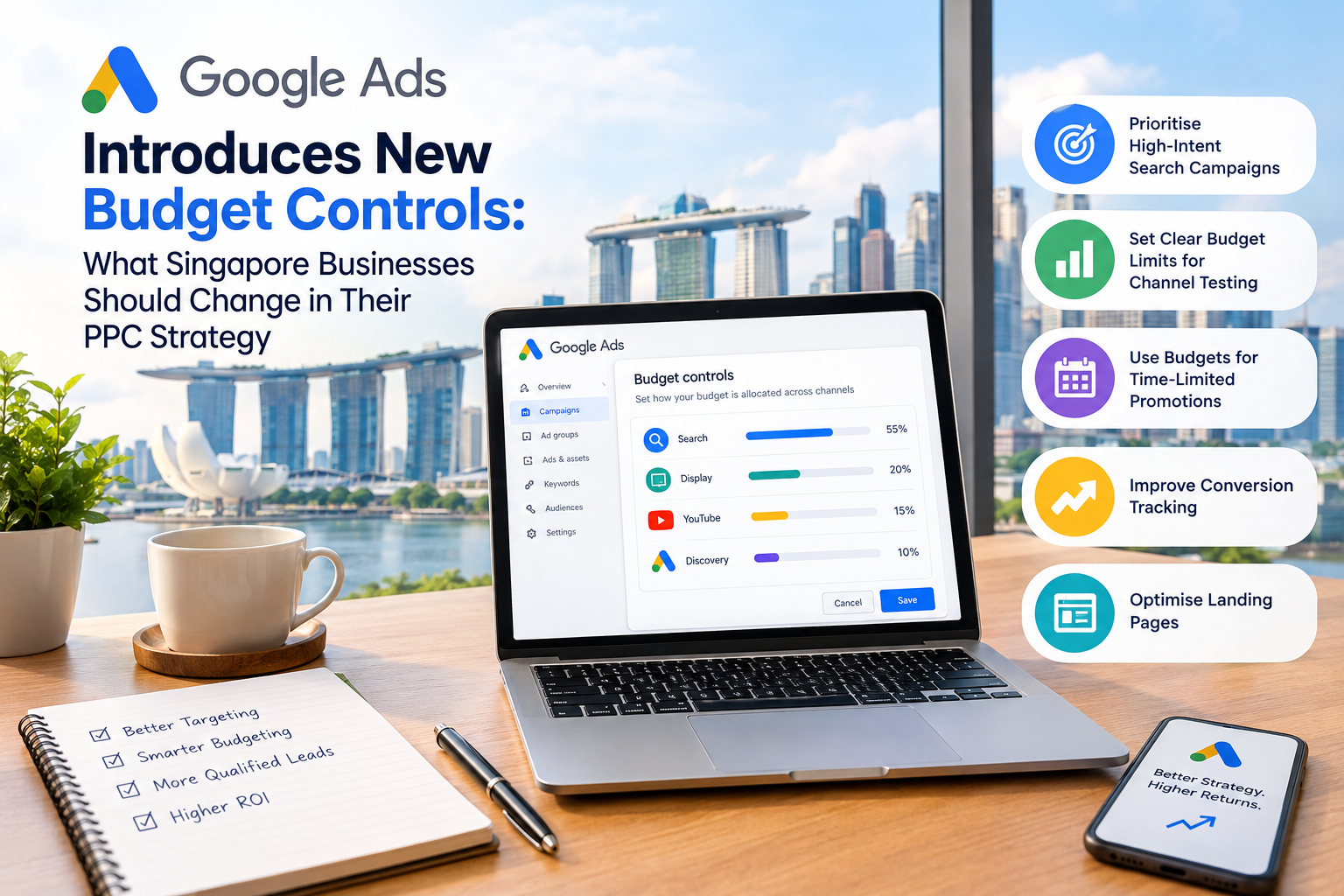
Google Ads is giving advertisers more options to manage how their campaign budgets are distributed across advertising channels. For businesses investing in paid search, e-commerce advertising and lead generation, these changes create an opportunity to align advertising spend more closely with business goals.
For companies working with a digital marketing agency in Singapore, the update is a timely reason to review campaign performance, identify valuable traffic sources and improve budget allocation. Rather than focusing only on clicks and impressions, businesses need to understand which campaigns generate qualified enquiries, sales and sustainable returns.
For Singapore businesses, the real question is not simply how much to spend on Google Ads. It is how to use the available budget to reach relevant customers and improve marketing performance.
What Are the New Google Ads Budget Controls?
Google Ads budget management features can help advertisers make more informed decisions about campaign spending. Depending on the features available in an account, businesses may be able to prioritise selected advertising channels and manage how much budget is allocated to lower-priority channels.
These options can be particularly relevant for companies using PPC advertising in Singapore, where competition for commercially valuable search terms can make efficient budget management important.
However, new controls do not automatically guarantee lower advertising costs or more conversions. Results still depend on targeting, campaign structure, ad relevance, conversion tracking and landing page quality.
Why Budget Optimisation Matters for Singapore Businesses
Singapore’s competitive digital market makes it important for businesses to understand the relationship between advertising expenditure and actual business outcomes. A campaign may attract plenty of visitors but generate very few enquiries, while another may receive less traffic and produce more qualified leads.
Businesses should evaluate their campaigns using metrics such as conversion rate, cost per qualified lead, customer acquisition cost and return on ad spend. These measurements provide a clearer picture of whether the advertising budget is supporting business growth.
Working with a team that understands PPC services in Singapore can also help businesses assess targeting, identify irrelevant search terms and make more informed campaign adjustments.
5 PPC Strategy Changes Singapore Businesses Should Consider
1. Prioritise High-Intent Search Campaigns
Start by identifying the campaigns that attract people who are most likely to become customers. Search queries that include a specific service, location or commercial requirement can indicate stronger purchase intent, depending on the context.
For example, a business searching for professional marketing support may be closer to making a decision than someone researching a broad industry topic. Review search terms, conversion data and lead quality before deciding which campaigns deserve greater investment.
2. Set Clear Budget Limits for Channel Testing
Testing different advertising channels can help businesses discover new audiences, but unstructured testing can make spending difficult to evaluate. Establish clear performance targets before launching a test, and compare the results against your primary campaigns.
Measure success through qualified leads, purchases and acquisition costs rather than clicks alone. This helps businesses decide whether a channel deserves more investment or requires further optimisation.
3. Use Campaign Budgets for Time-Limited Promotions
Businesses running seasonal offers, product launches or event promotions should choose a budget structure that suits the campaign’s duration and objectives.
A defined campaign budget can make it easier to plan spending for a limited period, while daily budget strategies may suit ongoing campaigns. Always review the spending rules and available settings for the selected campaign type before launch.
4. Improve Conversion Tracking Before Increasing Spend
Accurate conversion tracking helps advertisers understand which campaigns produce meaningful business results. Track relevant actions such as completed purchases, qualified enquiry forms, booked consultations and verified phone leads.
Businesses investing in SEO services in Singapore alongside paid advertising should also assess how organic search and PPC contribute to their overall customer acquisition strategy. Each channel serves a different purpose, but both benefit from clear goals, useful landing pages and reliable measurement.
5. Optimise Landing Pages Alongside Ad Budgets
A well-managed advertising campaign can still underperform when visitors land on a slow or confusing webpage. Ensure that landing pages match the advertisement, explain the service clearly and make the next step easy.
Mobile usability, page speed, relevant content and simple enquiry forms can all support a better user experience. Budget optimisation works best when the entire customer journey from search to conversion is considered.
How Maninder Wave Can Help Businesses Improve PPC Performance
Effective paid advertising requires more than setting a budget. Businesses need a strategy that connects keyword research, campaign targeting, compelling ad copy, landing page optimisation and conversion measurement.
Maninder Wave helps businesses strengthen their digital marketing strategy through services focused on search visibility, paid campaigns and measurable performance. By reviewing campaign data and identifying opportunities for improvement, businesses can make more informed decisions about where their advertising budget should go.
For Singapore companies, the right approach depends on their industry, competition, target audience and growth objectives. A structured review of existing campaigns can help identify opportunities to improve efficiency and generate more relevant enquiries.
Conclusion
Google Ads budget controls provide additional options for advertisers looking to manage campaign spending more strategically. However, sustainable results depend on combining appropriate budget settings with strong targeting, reliable conversion tracking and relevant landing pages.
Singapore businesses should review their current performance, identify their most valuable traffic sources and test suitable adjustments carefully. With a data-led approach, paid advertising can become a more effective part of a broader digital marketing strategy.
Frequently Asked Questions
Google Ads budget controls are settings that help advertisers manage campaign spending. Available options depend on campaign type, account eligibility and Google’s current feature rollout.
Businesses can improve campaign performance by targeting relevant searches, excluding irrelevant queries, tracking qualified leads and regularly reviewing cost per conversion.
PPC can help businesses reach potential customers through paid placements, while SEO supports visibility in organic search results. Using insights from both channels can help businesses understand customer intent and improve their overall marketing strategy.
Relevant, fast-loading and easy-to-use landing pages help visitors find the information they need and complete actions such as requesting a quotation or making a purchase.
A digital marketing agency can support campaign planning, SEO, paid advertising, conversion tracking and performance analysis based on the company’s objectives and available budget.
